


In a nutshell
In late 2025, Client Relationship Manager, Govind Bhalla, relocated to Norway to spearhead our growth in the Nordic region. As we approach the end of this year, Gov reflects on his first three months in a new country and introduces us to a new word.
What I’ve learned about work, culture, and opportunity in the Nordics
It’s been just over three months since I made the move from the UK to Norway – a shift that felt both exciting and daunting at the same time. Moving country is one thing; moving into a completely different business culture is another.
And although it’s early days, there’s already been more than enough to reflect on.
People often assume that experience is universally transferable. After all, the UK and Norway aren’t worlds apart geographically. Both are modern economies. Both are seen as progressive and high-performing.
But here’s my first major learning: Extensive experience in the UK market doesn’t automatically translate seamlessly into the Nordics.
And that’s not a weakness. It’s one of the most fascinating aspects of working in this region.
A corporate culture rooted in trust, balance, and collective responsibility
Norwegian corporate culture is distinct. In the UK, you often see hierarchy, assertiveness, and individual accountability shape decision-making. In Norway, the tone is much more egalitarian.
People are calm, considered, and collaborative. Meetings are purposeful rather than performative. Leaders are informal and accessible. Work-life balance isn’t a “benefit” but a structural expectation.
And there is a genuine belief that success is shared.
What’s particularly interesting is how organisations here don’t benchmark heavily against markets like the UK. Many Nordic companies operate primarily within Scandinavia, which means they don’t always have the visibility of global best practice.
That’s where my background becomes genuinely valuable:
Bringing UK examples, whether in HR, organisation design, governance, or technology adoption, often offers a new lens that organisations here haven’t encountered before.
Not to “change the Nordic way” but to add a different perspective.
Understanding Janteloven: The Unspoken Cultural Code
One of the most profound insights has come from understanding Janteloven (“The Law of Jante”), a cultural philosophy that still subtly shapes behaviour in Norway and the wider Nordics.
Although originally a literary concept, it has become a shorthand for a set of social expectations:
-
- Don’t think you’re above others
- Don’t brag
- Don’t assume you’re smarter or better
- Don’t push your success forward too loudly
In practice, it isn’t about suppressing achievement; it’s about maintaining humility, equality, and cohesion within a group.
In UK culture, success is often celebrated individually, and ambition is encouraged openly. In Norway, ambition exists, but it’s expressed differently:
-
- Quiet competence over loud confidence
- Collective recognition over individual spotlight
- Contribution over competition
For someone arriving from the UK consulting world, where personal brand, visibility, and assertiveness are often survival tools, adjusting to Janteloven is an education in itself.
It affects how you lead, sell, collaborate, and even how you phrase recommendations. You quickly learn that influence here is built not through force, but through trust, shared ownership, and understated credibility.
Technology: The invisible infrastructure behind everything
In terms of technology, Norway is one of the most advanced societies in the world. Digital systems here don’t just support life; they run life.
The D-Number experience is a perfect example.
In the UK, setting up as a foreign national involves bureaucracy, manual processes, and long wait times. In Norway, the moment your D-Number is issued:
-
- banking
- mobile payments
- taxation
- digital IDs
- healthcare access
- government services
…all become available almost instantly.
You’re plugged into a fully integrated digital ecosystem that simply works.
Transformation isn’t a journey here; it’s the baseline expectation.
The industries shaping Scandinavia’s future
Another major observation over the past three months has been the difference in economic focus. Certain industries here are not just growing, they’re defining the future of the region.
1. Renewable Energy and Cleantech
Hydropower, offshore wind, green hydrogen, and sustainable steel.
Scandinavia is at the forefront of global sustainability.
2. Fintech and Digital Payments
Scandinavia practically invented the Cashless Society. Adoption rates for mobile payments are among the highest in the world.
3. Healthtech and Medtech
Tech-enabled health services, digital records, telemedicine, diagnostics. An integrated ecosystem that enables scalable innovation.
4. Maritime, Ocean Tech and Aquaculture
Norway’s ocean-based industries are booming: autonomous vessels, green shipping, marine robotics, and advanced aquaculture systems.
What these three months have really taught me
Living and working in Norway requires a shift, not just in process, but mindset.
To succeed here, you need to:
-
- embrace humility (hello, Janteloven)
- lead through trust, not authority
- prioritise collective success over personal visibility
- respect the deep-rooted commitment to equality
- navigate a society where technology quietly handles complexity
- bring international examples in a way that complements, rather than disrupts, the Nordic way of working
It’s a refreshingly forward-thinking environment with a deep sense of purpose.
And although I’m only three months in, one thing is already clear: The Nordics are not just modern, they’re advanced. In culture, in digital maturity, and in strategic industries that will define the next several decades.
Moving here hasn’t just been a change of country. It’s been a change of pace, a change of perspective, and a change of understanding what a truly balanced, technologically mature, and equality-led society can look like.
And I’m excited for what the next chapter holds.
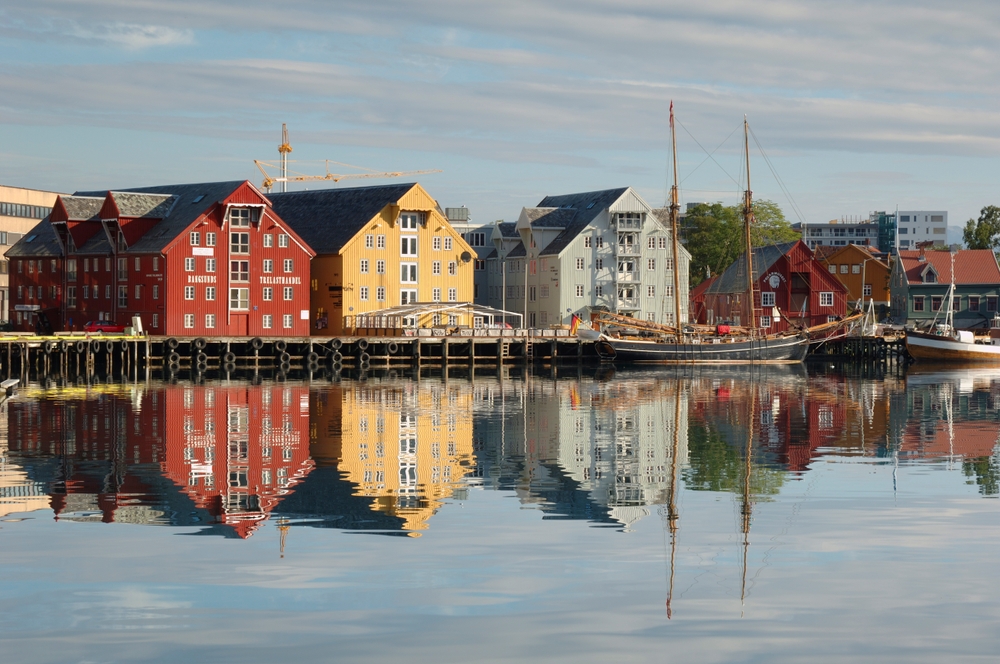
Image (c) Shutterstock | Robert Harding Video
Contact Us
- My first three months in Norway: What I’ve learned about work, culture, and opportunity in the Nordics - 12 December 2025
- HR Technology in Talent Management - 3 September 2024